
A beautiful shot of our historic barn at Leslie Park

The Barn at Leslie Park
Showing posts with label Audubon Cooperative Sanctuary Program. Show all posts
Showing posts with label Audubon Cooperative Sanctuary Program. Show all posts
Sunday, August 21, 2011
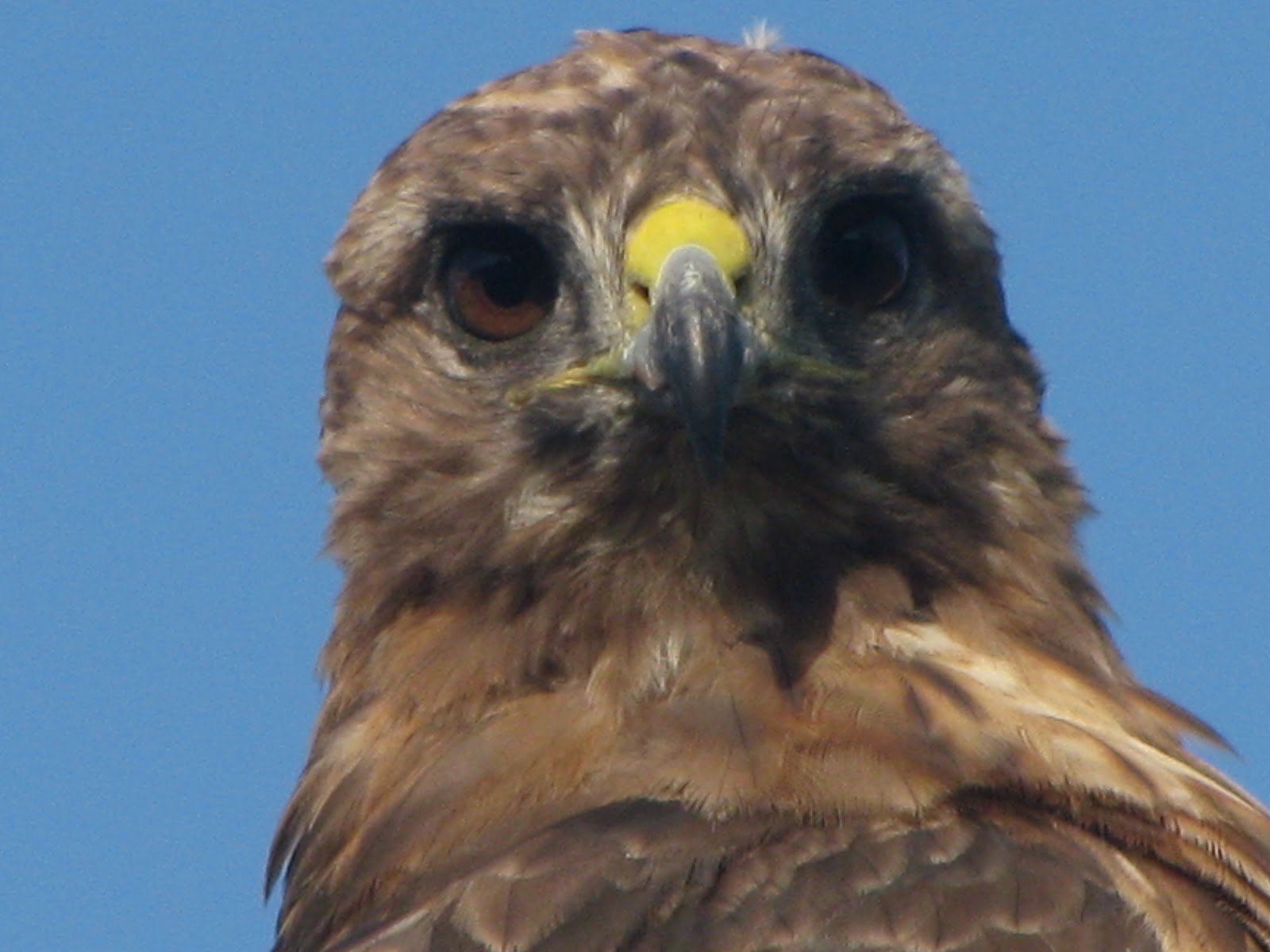
More Hawk Pictures
One of our golfers (Amos Wells) snapped this shot up on 14 tee with his cell phone.


Monday, August 15, 2011




Tuesday, August 9, 2011
Wildlife Sightings
Today, a couple of guys on the crew were excited to tell me about these two deer near the pumphouse at Leslie Park. They were only about 20 feet from the road and would just watch you ride by in a cart.

This heron was looking for an easy meal due to the high level of Traver Creek.


This heron was looking for an easy meal due to the high level of Traver Creek.

Friday, August 5, 2011
Audubon Cooperative Sanctuary Progress

Tuesday, August 2, 2011
Red-Tailed Hawk

Friday, June 17, 2011
Survival of Bluebirds on Golf Courses
The following is an exerpt from the USGA Green Section Record, courtesy of Michigan State University's Turfgrass Information Library.
Researchers at the College of William and Mary document the survival of eastern
bluebirds fledged on and off golf courses to compare fledgling success rates.
By Allyson K. Jackson and Daniel A. Cristol
Birds are particularly visible residents of golf courses, and few are more attention grabbing than the eastern bluebird. Eastern bluebirds prefer to nest and forage in areas at the intersection of forest and field. Golf courses, with their juxtaposed fairways and trees, are prime real estate for bluebird nests. Bluebirds are secondary cavity nesters because they nest only in cavities that have been excavated first by another species. Historically, they nested in old woodpecker holes, but in the present day they nest successfully in artificial nest boxes. Many local bird clubs and golf course managers now provide nest boxes for bluebirds, which
attracts them to golf courses in high numbers. However, it is unknown how successful bluebirds fledged on golf courses are at surviving to produce offspring of their own, and how the survival of golf course fledglings compares to non-golf sites.
FLEDGLING BIRDS
Early research on other species showed that fledglings die primarily due to two causes — predation and
starvation. Predation is common among young birds because they are not yet proficient at flying and depend
almost entirely on their parents for protection. As they get older and reach independence from their parents, the common cause of death is starvation because many do not have the experience to successfully find enough food to sustain them. The habitat that a bird fledges into could affect its survival, as fledglings
generally require complex vegetation structure to allow escape from predators. Because golf courses generally offer less dense vegetation, we wanted to test if there was a difference in fledgling survival rates between golf course and non-golf habitats.
We chose three local golf courses (all non-links style) and four non-golf sites (ranging from a college campus
to a state park) typical of bluebird nesting habitat in the area around Williamsburg, Virginia. We determined
nesting success on each site by checking each nest box weekly to establish how many eggs were laid
and how many babies survived to fledge.
We used small radio transmitters to track fledgling survival on golf courses in 2008 and 2009. After the birds
fledged naturally, we tracked survival of the birds for up to 40 days after they fledged by relocating them every other day. Every time a fledgling was found, we took a global positioning system (GPS) reading to record its location. The transmitters also enabled us to document the cause of mortality in cases where a bird died before the end of the study.
CAUSES OF MORTALITY
We tracked 156 bluebird fledglings over the course of the study and documented 57 mortality events. Bluebird fledglings died primarily due to hawk predation, with a subset dying due to starvation or disease, snake predation, or window strikes. Hawk predation is a common cause of death for many species of songbirds. Because bluebird fledglings are such weak flyers, it follows that they could be easy sources of prey for raptors such as red-shouldered hawks, redtailed hawks, and the most likely culprit, Cooper’s hawks. Cooper’s hawks are specialists at songbird predation and are raising their own nestlings at the
time of year when we observed peak bluebird mortality.
The second most common cause of death was starvation or disease, where we recovered the body of the fledgling still intact and attached to the transmitter. This cause of mortality was more common for older fledglings after independence from their parents. We recorded six instances where fledglings were killed by snakes, either black rat snakes or black racers — both common edge specialists in Virginia. There does not appear to be a difference in causes of mortality between golf course and reference sites, indicating that similar predators are found in both habitats.
SURVIVAL RATES ON GOLF AND REFERENCE SITES
We detected no difference between golf course and reference sites regarding survival to 40 days post-fledging, indicating that golf course fledglings did no worse than their reference counterparts. Both groups of fledglings averaged about 65% survival to 40 days post-fledging. Our golf course sites were surrounded by suitable habitat, however, so we cannot comment on what would happen on golf courses in more urban landscapes where the birds do not readily find habitat nearby. When we looked at other factors that may affect survival, we found that there was a large difference between the early and late portions of the breeding season. Birds that fledged early (May and June) were more likely to die than birds that fledged later (July
and August). This could be due to the decrease in hawk predation later in the season. In the late summer months when raptors are no longer feeding their young, we saw a decrease in the number of hawk-related mortalities. We also found the habitat around the nest box was an important determinant of early survival. Immediately after fledging, most birds did not move far from their nests and were constrained to whatever habitat was nearby. Fledglings were more likely to be killed by hawks if they fledged from boxes surrounded by little or no forest cover. If cover was not found near the nest box, reaching safety required a longer and more dangerous journey. Birds that survived had significantly more forest cover around their nest
box than those that were killed.
CONCLUSIONS
This study is the first to document that bluebird fledglings on golf courses do no worse than their reference counterparts, despite the potential threats of human disturbance, pesticides, and intensive turf management. Our data also provide for implementation of easy and sound conservation strategies for helping bluebirds on all heavily manicured sites — be it a golf course or a city park. By placing nest boxes in areas where there is sufficient forest cover with undergrowth, we can significantly improve survival of fledgling bluebirds during their most vulnerable early weeks of independence.
ACKNOWLEDGEMENTS
We would like to thank the golf course and park managers who allowed us extensive access to their sites. This project was funded by a National Fish and Wildlife Foundation Wildlife Links grant (funded by the USGA Turfgrass and Environmental Research Program). Supplemental funding was provided by the College of William and Mary Biology Department, the Association of Field Ornithologists E. Alexander Bergstrom Memorial Award, Sigma Xi Grants-in-Aid of Research grant, Coastal Virginia Wildlife Observatory
Joy Archer Student Research Grant, Williamsburg Bird Club Student Research Grant, and W&M Arts and
Sciences Graduate Research Grant. Field assistance was provided by J. P. Froneberger.
ADDITIONAL REFERENCES
http://www.usga.org/uploadedFiles/USGAHome/course_care/green_section_record/2009/nov_dec/bird_pesticide_exposure.pdf
Allyson K. Jackson, M.S.,
BioDiversity Research Institute, Gorham, Maine;
and
Daniel A. Cristol, Ph.D.,
Professor of Biology,
Institute for Integrative Bird Behavior Studies,
Department of Biology,
The College of William and Mary,
Williamsburg, Virginia.

Monday, April 4, 2011
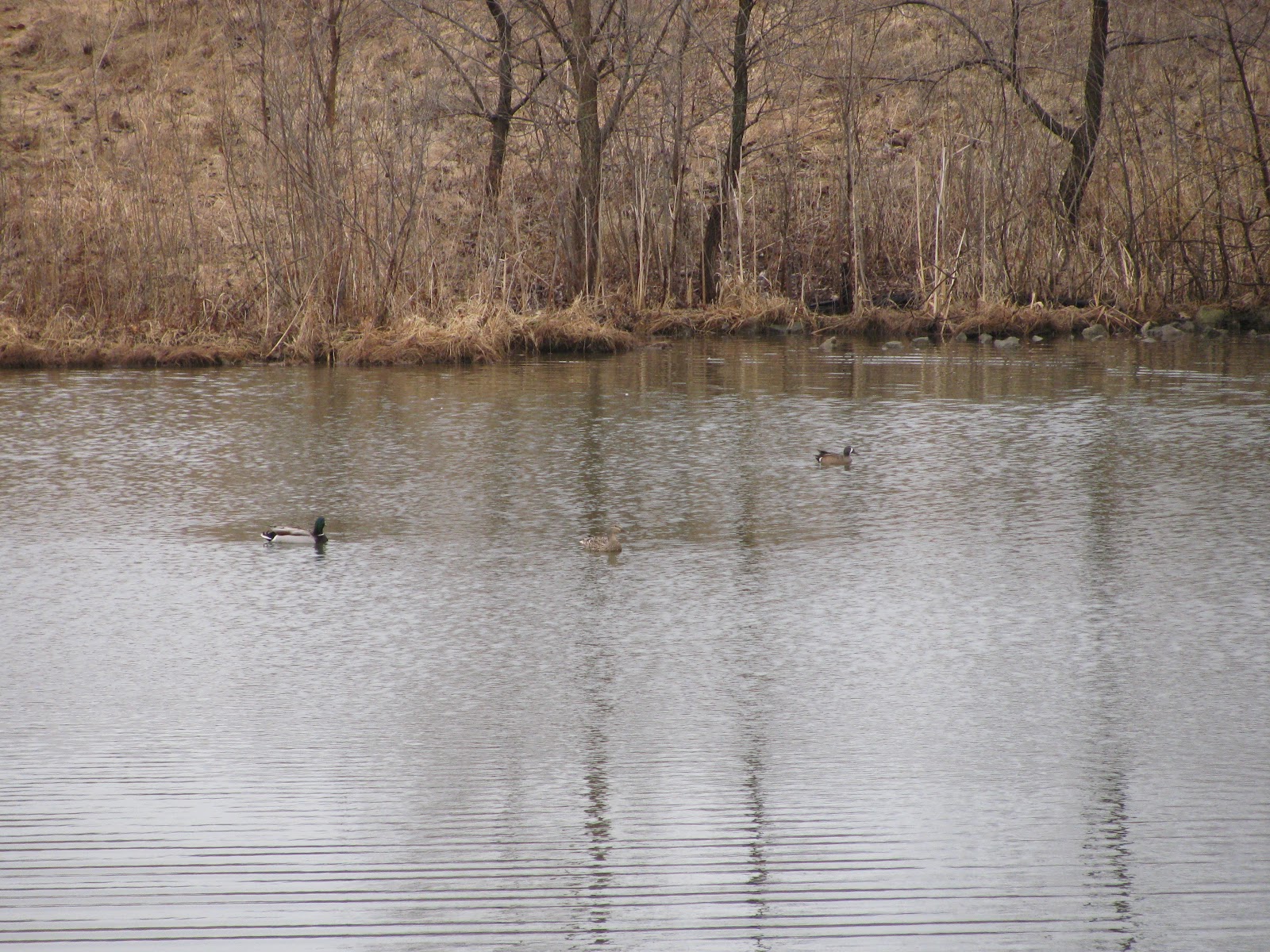
Blue Winged Teal
These four ducks were out on the pond on #8 this morning. I believe they are Blue Winged Teal.




Wednesday, March 30, 2011
Red-tailed Hawk

Monday, March 7, 2011
Ann Arbor Learning Comunity comes to Leslie Park
Last Wednesday, members of Tracey Marchyok's 4th and 5th grade class from the Ann Arbor Learning Center along with Stefan Szumko from the Leslie Science and Learning Center, came to the Leslie Park Golf Course to test Traver Creek for various factors, such as pH, nitrogen, phosphorous and temperature. ( A link to an Ann Arbor.com article is here)
Scott Spooner, superintendent of Leslie Park, spent some time talking to the class about the things the golf course is doing to enhance wildlife habitat and become certified in the Audubon Cooperative Sanctuary Program for Golf Courses.


Scott Spooner, superintendent of Leslie Park, spent some time talking to the class about the things the golf course is doing to enhance wildlife habitat and become certified in the Audubon Cooperative Sanctuary Program for Golf Courses.


We then went out and tested the water. Stefan was nice enough to don the waders and pull the water out for the kids and then spent a half an hour searching around for macro-invertebrates in the mud.


The class then walked through Black Pond Woods back to the science center.


Thursday, January 27, 2011
Audubon Cooperative Sanctuary Program
Audubon Cooperative Sanctuary Program
Leslie Park also is working on becoming a certified sanctuary through Audubon International's Cooperative Sanctuary Program for Golf Courses. This program was developed by Audubon International, and helps golf courses protect our environment and preserve the natural heritage of the game of golf. By helping enhance the valuable natural areas and wildlife habitats that golf courses provide, enhancing efficiency, and minimizing potentially harmful impacts of golf courses, the program serves as a vital resource for Leslie Park.
The Audubon program is designed to protect and sustain the land, water, wildlife, and natural resources in and surrounding the golf course. Currently Leslie Park has achieved status in the Environmental Planning category. We are working towards achieving full certification as a Certified Audubon Cooperative Sanctuary. There are five more categories in which we need to achieve full Cooperative Sanctuary certification. They are:
1. Chemical Use Reduction and Safety
2. Wildlife and Habitat Management
3. Water Conservation
4. Water Quality Management
5. Outreach and Education
Leslie Park also is working on becoming a certified sanctuary through Audubon International's Cooperative Sanctuary Program for Golf Courses. This program was developed by Audubon International, and helps golf courses protect our environment and preserve the natural heritage of the game of golf. By helping enhance the valuable natural areas and wildlife habitats that golf courses provide, enhancing efficiency, and minimizing potentially harmful impacts of golf courses, the program serves as a vital resource for Leslie Park.
The Audubon program is designed to protect and sustain the land, water, wildlife, and natural resources in and surrounding the golf course. Currently Leslie Park has achieved status in the Environmental Planning category. We are working towards achieving full certification as a Certified Audubon Cooperative Sanctuary. There are five more categories in which we need to achieve full Cooperative Sanctuary certification. They are:
1. Chemical Use Reduction and Safety
2. Wildlife and Habitat Management
3. Water Conservation
4. Water Quality Management
5. Outreach and Education
Subscribe to:
Posts (Atom)